
Unio Tech Solutions
·
Every office has it. Every office needs it to operate properly.
If you're a decision-maker in commercial real estate, facilities or IT departments then it helps to understand what network cabling is and how it may affect future planning for changes to IT infrastructure and/or changes in network requirements. For example, if you're expanding to additional floors in a building or adding hundreds of new employees to have access to your network, then adjustments or additions to the cabling may need to happen.
Not a cabling expert? Don't worry, we'll break down network cabling clearly, so you can explain it to anyone who asks.
What is Network Cabling?
It is the physical cables. Simply put, network cabling allows for any devices in the office to connect directly to the network, whether it is a local area network (LAN) or a wide area network (WAN).
For example, network cables can connect a large printer to a switch or connect a switch to a router. Network cabling also transmits data between devices, aka "data cabling". You've probably also called them "ethernet cables" - it is basically the same thing.
The most popular kinds of cables are Cat6 or Cat6a cables, and patch cabling. Patch cables are shorter cables typically between 1-5 feet that connect one device to another within a server rack.
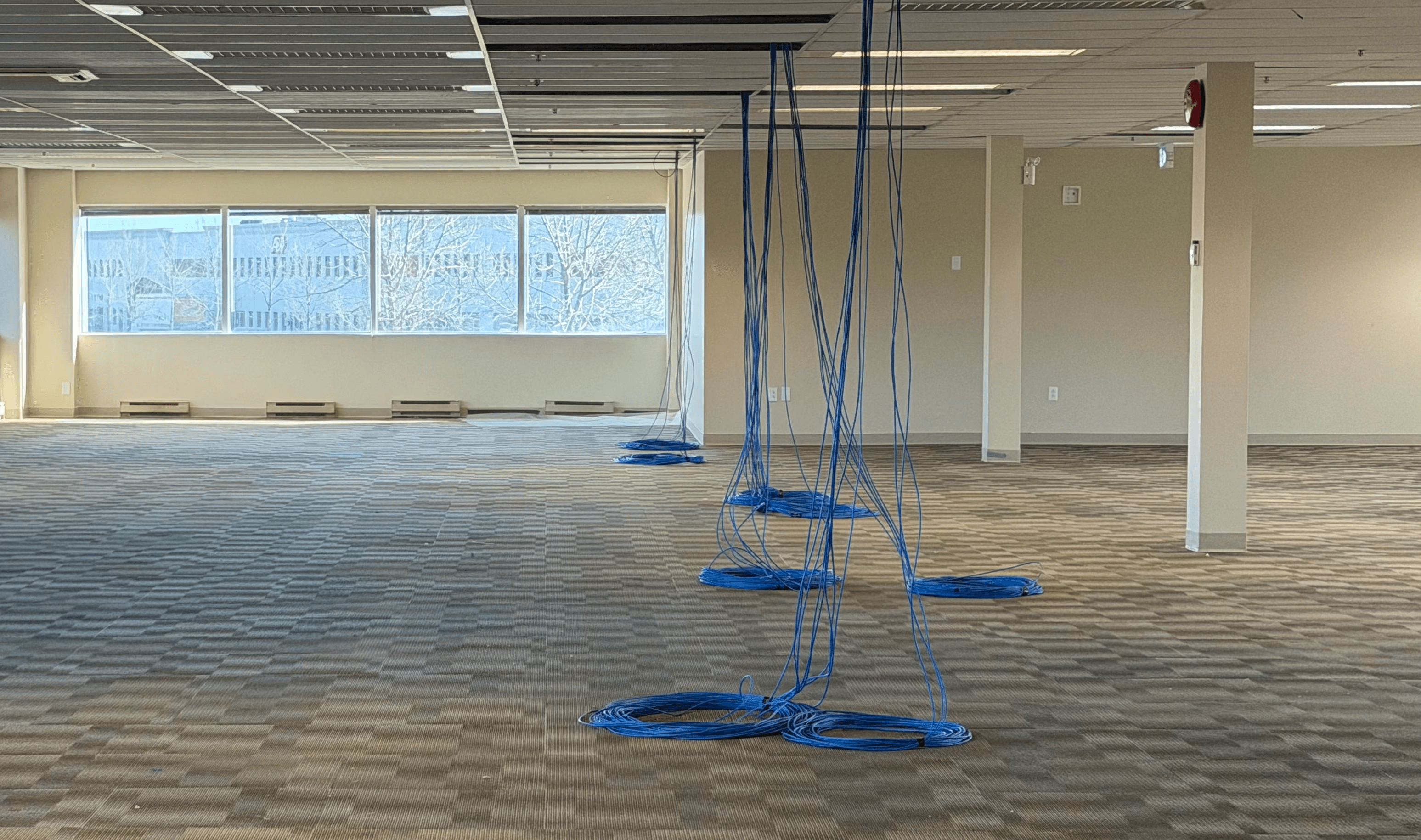
The cabling is often blue but comes in a variety of colours because it allows your IT teams to distinguish between devices and uses (i.e.: VoIP systems vs. AV systems vs. data connections vs. security systems, etc).
If you're working in a commercial office, network cabling is a must-have to ensure devices are connected to each other and/or the internet.
Note: If devices are connected to the network wirelessly (via WiFi), then they likely don't have network cables directly connected into them. In those cases, the devices are connected to the network via an access point, but the access point is connected to the network using network cabling.
Structured Cabling vs Network Cabling: What's the Difference?
Structured cabling refers to the actual infrastructure setup of a network with cables. It is the blueprint for your office's network. You could think of structured cabling kind of like a script in a movie, which is the seed that allows all the creativity of all the film's departments to flourish and grow. Without a well-written script, the rest of the pieces that encompass making a movie are already put at a disadvantage. Without a proper structured cabling plan, all your big plans for how your office will function may be affected – you may encounter network connection issues, slow download/upload speeds, or redundancy issues.
Especially if you plan to be in your space for 10+ years, proper structured cabling allows you to future-proof your network and make strategic decisions on the placement of devices (like access points) and determine how devices in your office will interact.
Realistically, structured cabling happens during new construction of commercial spaces or renovations of existing spaces.
Creating a structured cabling plan involves early-stage site visits of your space, detailed mapping of a network, coordination with the construction teams and electricians and eventually running network cabling through the ceilings, walls, or sometimes through the floors.
The physical cables are connecting firewalls, switches, and access points to the patch panels in the server room. Structured cabling is not just data cabling installation; it is also important to install all VoIP and security system cables.
Since this process happens at the early stage of an office setup, it doesn't involve connecting printers, laptops, or other computers to the network. That happens after the construction or renovation of a commercial space is already done.
Network cabling involves adding data drops or additional access points to help speed up the network connection in certain areas of an office, or for connecting desktop/workstation technology to the network. Network cabling projects can also involve patch panel cable cleanups or replacing certain cables within the existing infrastructure that are damaged with new, freshly terminated cables.
You can think of network cabling like the final stage of post-production in a film. The film is already filmed, but certain pieces need to be added or tweaked to make it a stronger end-product.
Planning a cabling project for your office? Take a look at our network cabling services to see how we approach it.
Why Network Cabling is the Foundation of a Reliable Office
Good network cabling guarantees three things:
Reliable network connections (between devices and to the internet)
Fast load, upload, and download speeds on all your devices.
An opportunity to expand your network as your operations expand.
A network cabling infrastructure that is set up with precision and care will outlast even some of the actual technology in your office.
Let's say you have been in your current office for over a decade (or longer) and your network is having issues. Could you call your internet service provider (ISP) and rule out that it's an issue on their end? Of course. But you should also check if your current cabling may be a factor. Maybe cable ends are ripping apart, maybe you have dead zones in your office and you want to make sure that internet connections are strong throughout the space, or maybe you just feel like your server room cables are starting to look too much like spaghetti and want them to be organized – those are not things that your ISP will likely take care of.
Our cabling team at Unio Tech specializes in helping clients with precise cabling solutions. If you would like to strengthen your network connections or replace damaged or broken cables, or just want picture-perfect cables in your server room, then book a free site assessment and we'll get you sorted.
Cable Types Explained: Cat5e vs Cat6 vs Cat6a
There are different kinds of network cables or office data cables: Cat5e, Cat6, and Cat6a. Are they similar? Yes. Are they the exact same? No.
Cat5e is an older version, and most companies don't use it – if you are working in an older building from the 80s, 90s or early 2000s, you may want to check what cables are installed and update them asap.
Cat6 is the newer version and current industry standard. The bandwidth speed is reasonably fast (between 1-10 Gbps) but if it's a longer cable (over 50 metres), the speeds get slower the further the cable runs away from the network equipment in the server rack.
Cat6a is the newest version. If you need a high bandwidth connection (10 Gbps or more) over a greater distance (up to 100 metres) then this is the best option. Most new commercial buildings install Cat6a cables, and they are good value for the cost.
The next iteration is the Cat7 cable, they are extremely fast, but they are much more expensive.
How Long Does Network Cabling Last? When Should You Upgrade?
Don't worry – network cables don't degrade that fast. They generally can last over a decade unless they are damaged from rips in the shielding, or from extreme tension/pulling over a long period, or from water-based corrosion, etc.
If you already have an office space that has Cat6 cables for instance, they should be fine to keep as is. It is a huge, complex (and expensive) undertaking to replace all cabling in an active office.
We recommend waiting until you need to do a larger renovation or move out of the space to upgrade your full cabling infrastructure.
How Much Does Network Cabling Cost for an Office?
Network cables aka data cables aka ethernet cables appear light and cheap but they require professionals to install, replace or remove them properly to minimize downtime and to future-proof your IT operations.
The cost of network cabling installations varies depending on the number of drops and the length or complexity of the drops. We like to do per-drop pricing because it is usually more cost-effective for our clients rather than a vague flat quote.
Cable cleanups in server racks are a cost-effective and direct way to determine the state of your network infrastructure.
Planning replacements or adjustments to your office's network cabling doesn't need to be the cause of massive stress. When you have help from a team like Unio Tech Solutions, you'll get exactly what you need.
Get Your Office Network Sorted
Book a free site assessment with the Unio Tech Solutions cabling team. We'll look at your current setup, flag anything that needs attention, and give you clear per-drop pricing for the work you actually need.
TAGS:
network cabling, structured cabling, data cabling, Cat5e, Cat6, Cat6a, patch panels, cable management, office network, commercial spaces